

Key takeaways
What homeowners should know
- The insurance company's adjuster works for the carrier; a public adjuster works for the policyholder.
- Both may inspect damage, prepare estimates, and discuss scope, but their duties and client relationships differ.
- Public adjusters are independently hired and paid under a written agreement.
- Homeowners should verify licensing, experience, services, and fees before signing.
The simplest difference is who the adjuster represents
An insurance company adjuster—sometimes called a staff adjuster or independent adjuster—is assigned by the carrier to investigate and evaluate the claim for the insurance company. A public adjuster is hired by the policyholder to help prepare, document, and present the policyholder's property claim.
Both professionals may visit the property, review photographs, measure damaged areas, prepare estimates, and communicate about scope. Their work can look similar from the outside, but their client and professional responsibility are different.
What an insurance company adjuster does
The carrier's adjuster gathers information needed to make coverage and payment decisions under the policy. The adjuster may interview the policyholder, inspect the property, request documents, prepare or review an estimate, and report findings to the insurer.
The carrier provides this adjuster as part of the claim process, so the policyholder does not pay a separate fee for the visit. Cooperation and clear communication are important, but homeowners should remember that the adjuster is performing work for the insurance company.
What a public adjuster does
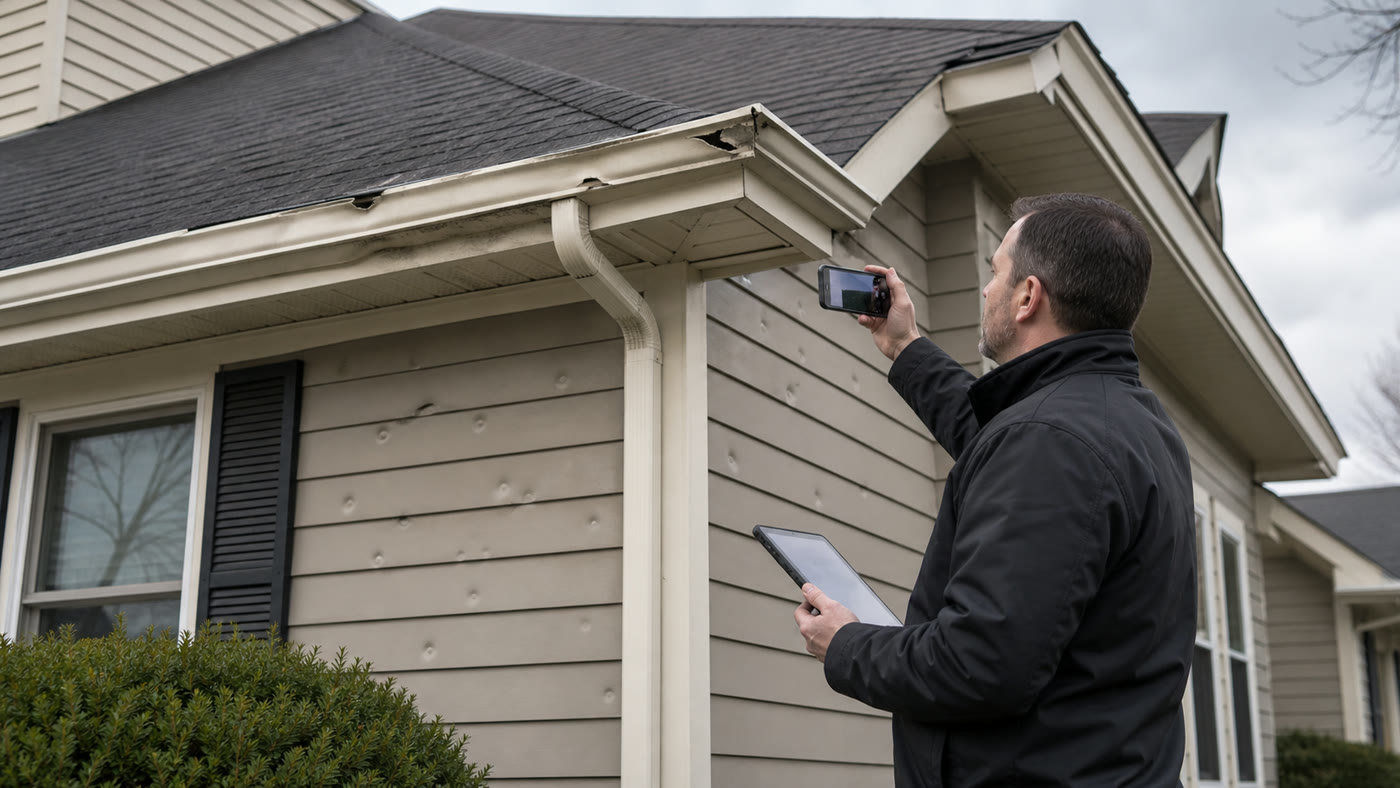
A licensed public adjuster works directly for the policyholder. Services can include inspecting the loss, organizing evidence, creating or reviewing a repair scope, preparing inventories, analyzing carrier estimates, attending inspections, and communicating the claim position to the insurer.
A public adjuster does not repair the building, determine final coverage for the carrier, or provide legal representation. The role is to help the policyholder manage the property claim with a complete, well-supported record.

How public adjusters are paid
Public adjusters are hired under a written contract and are commonly paid a percentage of the claim recovery, subject to applicable law and the agreement. The contract should clearly describe the fee, services, cancellation rights, responsibilities, and which parts of the claim are included.
Ask how the fee applies to prior payments, additional payments, deductibles, and work performed by other professionals. Never rely on a verbal promise that is inconsistent with the written agreement.
When a homeowner may consider hiring a public adjuster
Public adjuster assistance can be useful when the loss is large or complex, several trades or rooms are involved, business operations are affected, documentation is incomplete, the estimate appears to omit damage, or the policyholder cannot devote the necessary time to the claim.
It may also be appropriate after an underpayment or denial when a new property review could clarify disputed scope or cause. Not every small or straightforward claim needs paid representation.
- Multiple damaged building systems or interior areas
- Significant differences between contractor and carrier scopes
- Repeated requests, inspections, or communication delays
- A denied or underpaid claim that needs a documented re-evaluation
How to evaluate a public adjuster
Verify the adjuster's Illinois license and ask about experience with your type of property and loss. Request a clear explanation of the inspection, estimating, documentation, and communication work that will be performed. Review the contract without pressure and keep a complete signed copy.
Avoid anyone who promises a specific payment, asks you to exaggerate damage, discourages reasonable questions, or presents public adjusting as construction or legal representation. A credible professional should be comfortable explaining both the value and the limits of the service.
Can both adjusters be involved in the same claim?
Yes. The carrier's adjuster continues to represent the insurer, while the public adjuster communicates and presents documentation for the policyholder. The two may attend inspections, compare estimates, discuss disputed items, and exchange supporting information.
A productive claim process remains evidence-based. The objective is not to create conflict; it is to make sure the property conditions, repair scope, policy provisions, and supporting records are clearly understood.
This article provides general information and is not legal advice, coverage advice, or a guarantee of any claim outcome. Policy language and loss facts control each claim.