Only one roof slope or exterior elevation received attention.
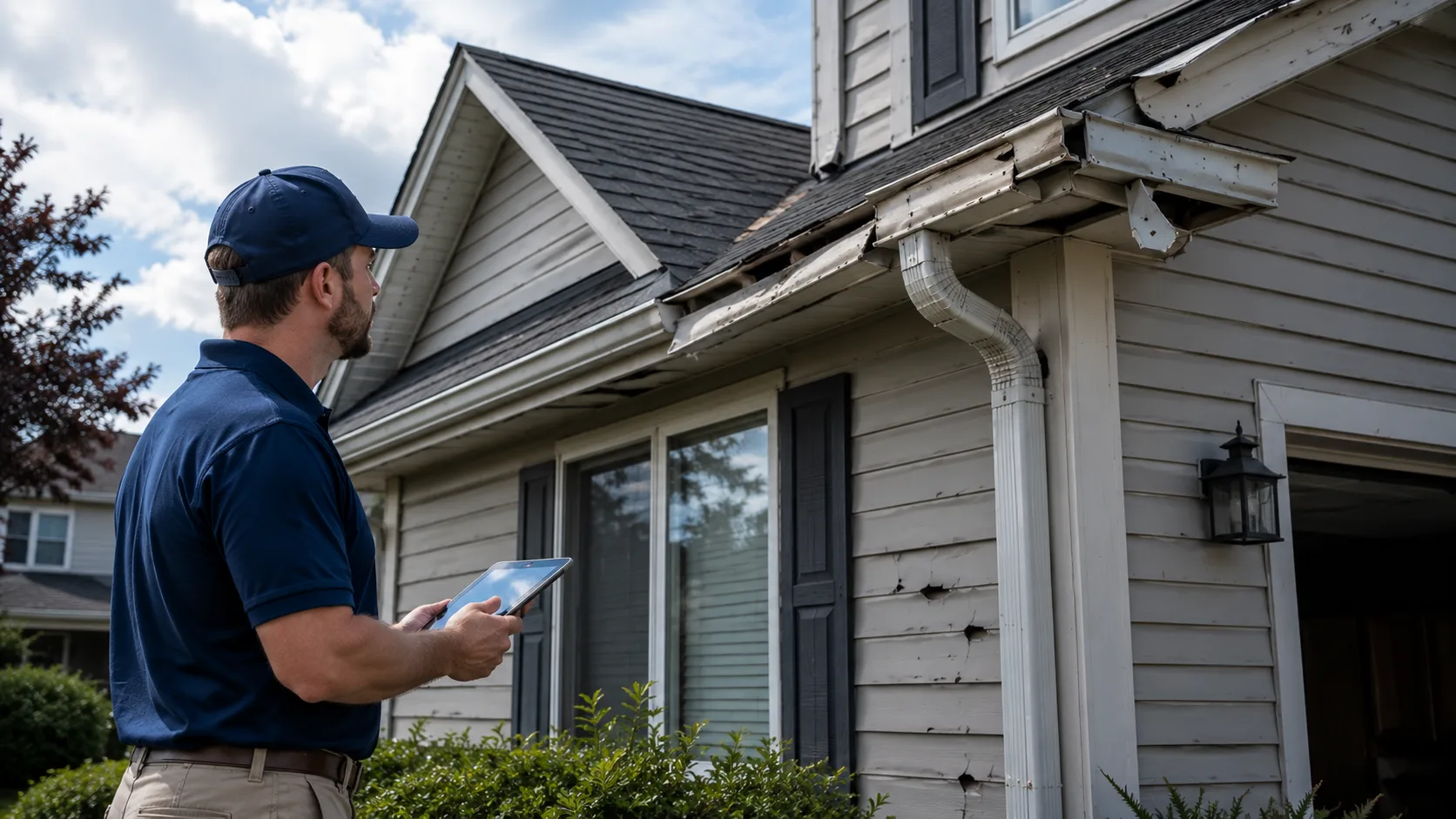
Inspect before decisions
Detailed property inspections
Document the visible damage before important claim decisions.
Our inspections help identify roof, exterior, interior, and commercial property damage connected with a reported loss.
ViewRoof + exterior + interior
MethodLocation-based documentation
OutputA clearer damage baseline
Start your review01
Recognize the situation
What looks like one damaged area may be part of a larger loss.
A quick look at the most visible problem can leave connected roof, exterior, or interior conditions undocumented. That gap becomes harder to address after repairs begin or materials are removed.
Interior staining appeared after the original inspection.
Photos exist, but they are not labeled or tied to measurements.
You are being asked to make repair decisions without a complete property review.
Field report 01
See the property before reducing it to estimate lines.
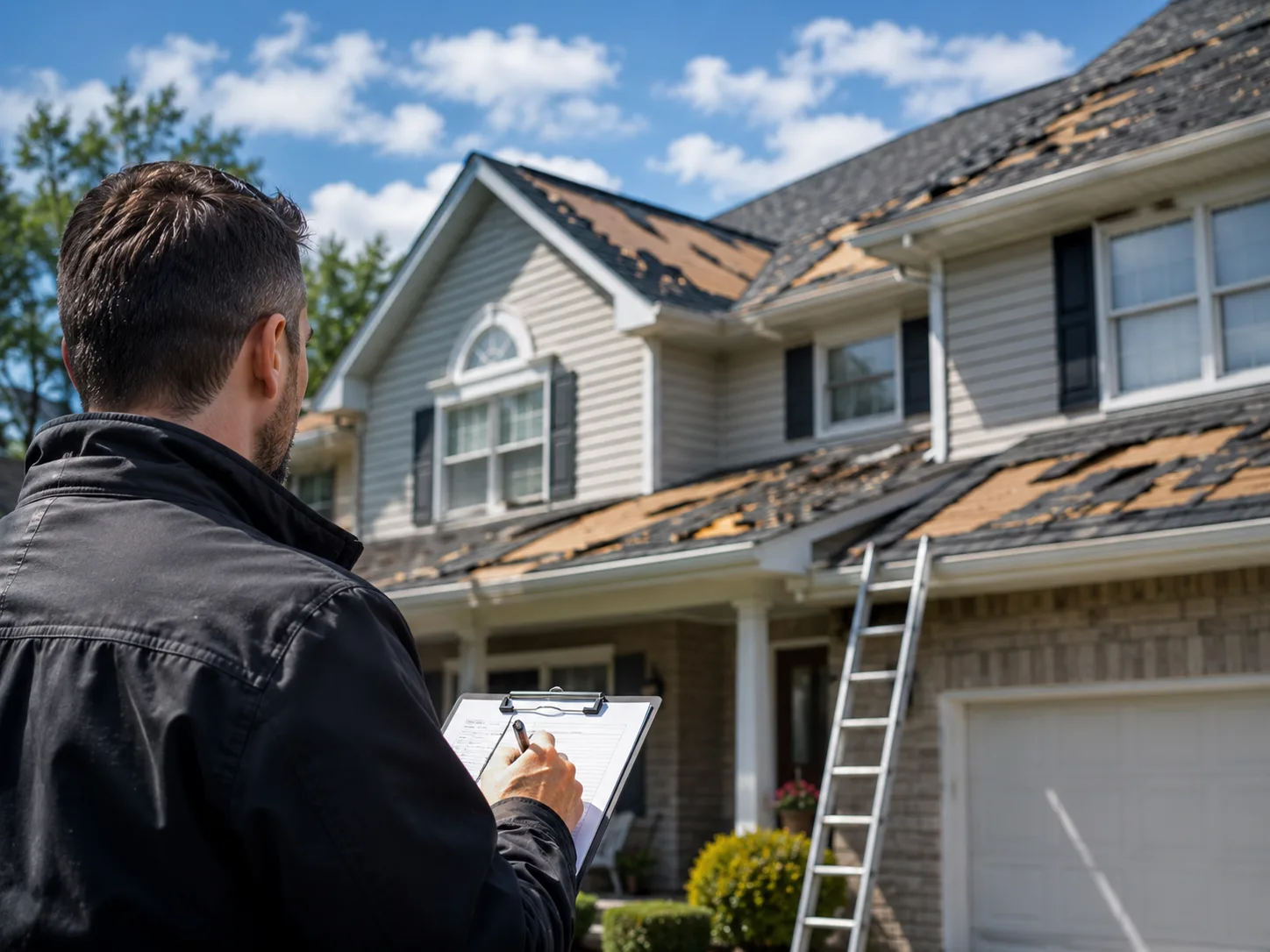
A useful inspection connects each visible condition to a location: slope, elevation, room, material, and nearby component. That spatial record is what turns observations into a property story.
Visible damage is not always limited to one surface. A storm may affect roofing, vents, flashing, gutters, siding, windows, fencing, and interior areas.
We document accessible damage with photographs, measurements, notes, and observations that can support the broader claim file.
02
What matters in this claim
A better claim record starts with a careful inspection.
01
Roof systems
Shingles, membranes, flashing, vents, and accessories.
02
Exterior systems
Siding, gutters, fascia, trim, windows, and related areas.
03
Interior areas
Visible water, smoke, and finish damage connected to the loss.
04
Commercial property
Building-envelope and accessible interior damage.
03
The American Adjusters approach
Create a documented baseline before important claim decisions are made.
We review accessible roof, exterior, and interior areas connected with the reported event. Photographs, measurements, notes, and observed conditions are organized so the property owner can better understand the visible scope of the loss.
Talk Through Your ClaimYour next four moves
A process you can see from the start.
No mystery handoffs. Each stage has a purpose, an output, and a clear connection to the stage that follows.
- 01
Listen and review
We learn what happened, where the claim stands, and which questions matter most to you.
- 02
Inspect and organize
Accessible property conditions and available claim records are brought into one structured picture.
- 03
Present and communicate
The documented loss is explained consistently through the appropriate claim communication.
- 04
Track the next steps
Open items, responses, and important decisions remain easier for the policyholder to follow.
What changes for the policyholder
From reacting to the claim to understanding the claim.
Broader property view
Connected surfaces and components are considered instead of treating one symptom in isolation.
Location-based evidence
Photographs and observations are connected to specific slopes, elevations, rooms, or systems.
A stronger starting record
The findings create a clearer foundation for estimates, documentation, and carrier communication.
04
Make the claim feel manageable again
Request a closer look at the reported damage.
Tell us what happened, what has already been inspected, and which areas concern you. We will contact you to discuss whether a property damage inspection fits the situation.
No-cost initial reviewNo obligation to hire usYour request reaches the claim review team
0102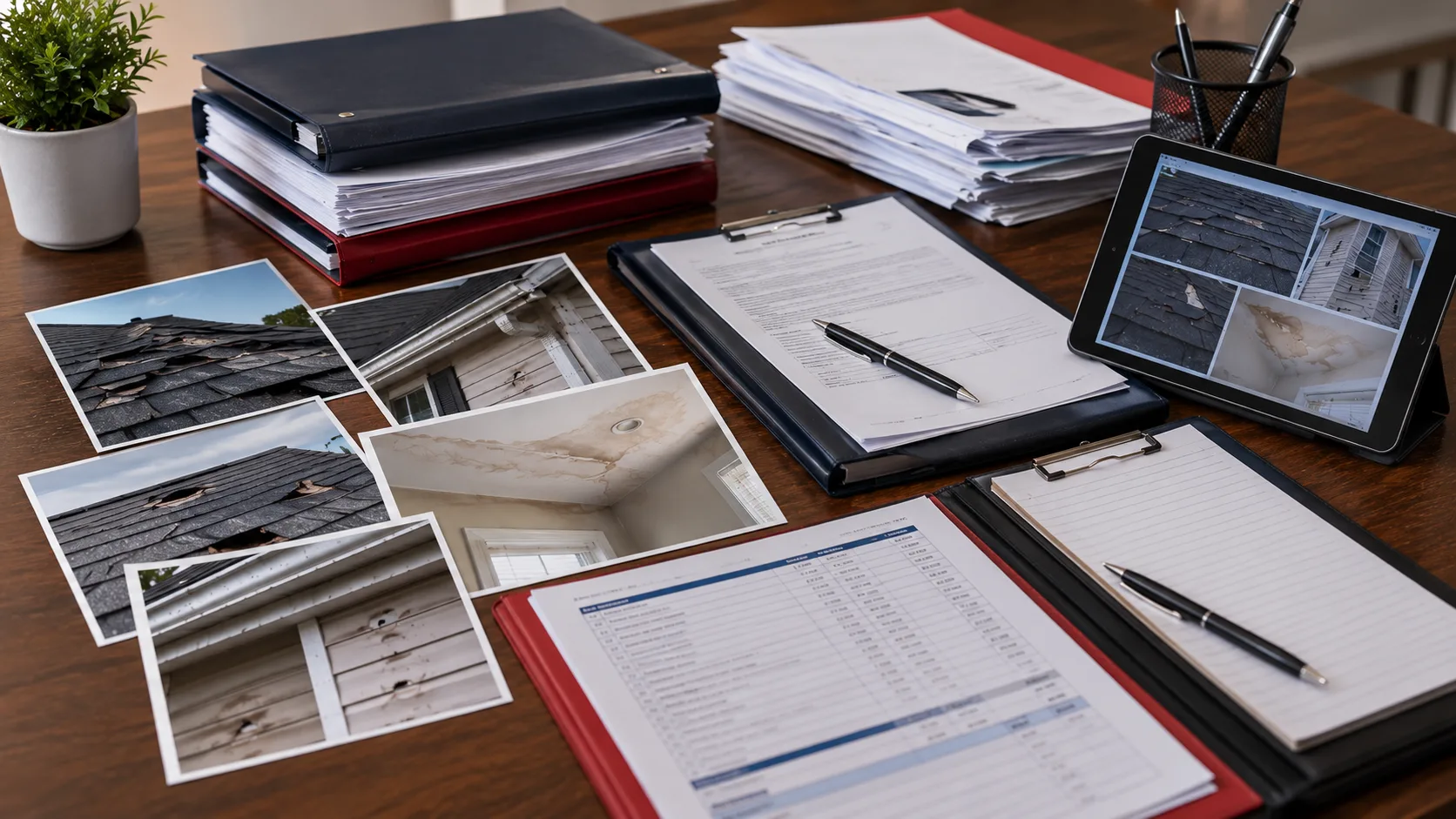 03
03
Property Damage Inspections
Our inspections help identify roof, exterior, interior, and commercial property damage connected with a reported loss.
Claim Documentation
We help organize photos, measurements, estimates, correspondence, and supporting details around the reported property loss.
Claim Negotiation
American Adjusters communicates with the insurance carrier on behalf of the policyholder throughout the claim review.