
The denial letter does not seem to address all reported damage.
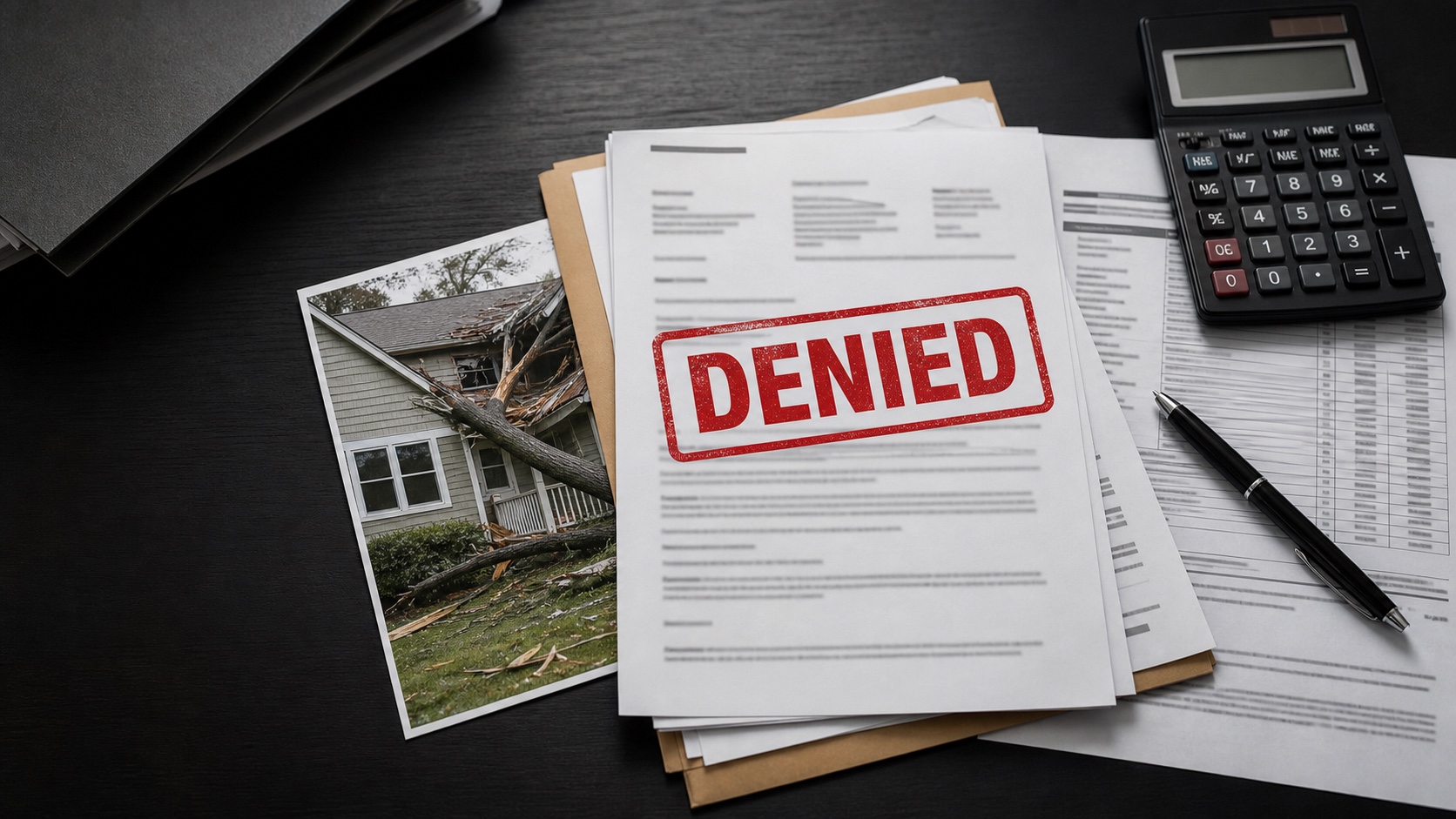
Decision ≠ explanation
Claim review after a difficult outcome
A denial or low payment does not have to be the end of the review.
We examine the available claim documents, damage information, estimates, and carrier position to identify open questions.
ReadThe stated carrier position
CompareDecision to available evidence
ClarifyThe next appropriate action
Start your review
Read the decision line by line
A difficult claim outcome should be understood before it is accepted.
A denial or limited payment usually rests on a stated cause, scope, timing issue, exclusion, or evidence gap. The first task is to compare that reasoning with the property record actually reviewed.
A claim may be denied or paid below expectations for many reasons, including scope differences, missing documentation, timing questions, or disputed cause of loss.
American Adjusters reviews the available information and helps the property owner understand whether additional documentation or claim communication may be appropriate.
01
Recognize the situation
A denial or low payment can leave you with more questions than answers.
The decision may cite cause, timing, wear, exclusions, limited scope, or insufficient documentation. Before reacting, it helps to understand exactly what the carrier evaluated and what information supported the decision.
The payment or estimate is far below the contractor scope you received.
Important photos, reports, invoices, or damaged areas were not considered.
You do not understand which policy or factual issue drove the decision.
03
The American Adjusters approach
Review the decision, the documented damage, and the gaps between them.
American Adjusters examines available carrier letters, estimates, photographs, reports, and property information to identify open factual or documentation questions. Additional review does not guarantee that a decision will change, but it can give the owner clearer grounds for the next conversation.
Talk Through Your Claim02
What matters in this claim
Start by understanding what the carrier decided—and why.
01
Decision review
Carrier letters, estimates, and explanations examined together.
02
Damage comparison
Visible conditions compared with the current carrier scope.
03
Missing information
Potential documentation gaps identified and organized.
04
Next-step guidance
A clearer understanding of available claim actions.
What changes for the policyholder
From reacting to the claim to understanding the claim.
Decision explained
Carrier letters, scope, and stated reasoning are reviewed together in plain language.
Evidence compared
Available property conditions and supporting records are compared with what the decision addressed.
Next step clarified
Understand whether more documentation, communication, or another professional resource may be appropriate.
Your next four moves
A process you can see from the start.
No mystery handoffs. Each stage has a purpose, an output, and a clear connection to the stage that follows.
- 01
Listen and review
We learn what happened, where the claim stands, and which questions matter most to you.
- 02
Inspect and organize
Accessible property conditions and available claim records are brought into one structured picture.
- 03
Present and communicate
The documented loss is explained consistently through the appropriate claim communication.
- 04
Track the next steps
Open items, responses, and important decisions remain easier for the policyholder to follow.
04
Make the claim feel manageable again
Let’s take a closer look at the claim decision.
Tell us whether the claim was denied, delayed, or paid below the documented scope. Share the central reason or concern, and we will contact you about the review.
No-cost initial reviewNo obligation to hire usYour request reaches the claim review team
01 02
02 03
03
Claim Documentation
We help organize photos, measurements, estimates, correspondence, and supporting details around the reported property loss.
Claim Negotiation
American Adjusters communicates with the insurance carrier on behalf of the policyholder throughout the claim review.
Free Claim Review
Tell us about the loss, the insurance claim, and any concerns about the inspection, estimate, denial, or payment.