Key takeaways
What homeowners should know
- Coverage depends on the cause, timing, policy language, and documented condition—not simply on whether the roof leaks.
- A roof claim may involve shingles, metal, flashing, ventilation, gutters, siding, attic, and interior finishes.
- Ground-level photographs are useful, but a qualified roof-system inspection may reveal hidden or subtle damage.
- Review both the repair scope and the payment calculation before assuming the estimate is complete.
Roof claims are about cause, scope, and coverage
A damaged roof does not automatically mean the entire roof is covered, and an older roof is not automatically excluded. The claim turns on what happened, when it happened, which conditions are new, what the policy covers, and what work is reasonably required to repair the covered damage.
Wind, hail, falling trees, fire, and sudden accidental events may be covered depending on the policy. Wear, deterioration, defective installation, long-term leakage, and maintenance conditions are commonly disputed or excluded. A careful inspection should distinguish among them.
Recognize common signs of wind and hail damage
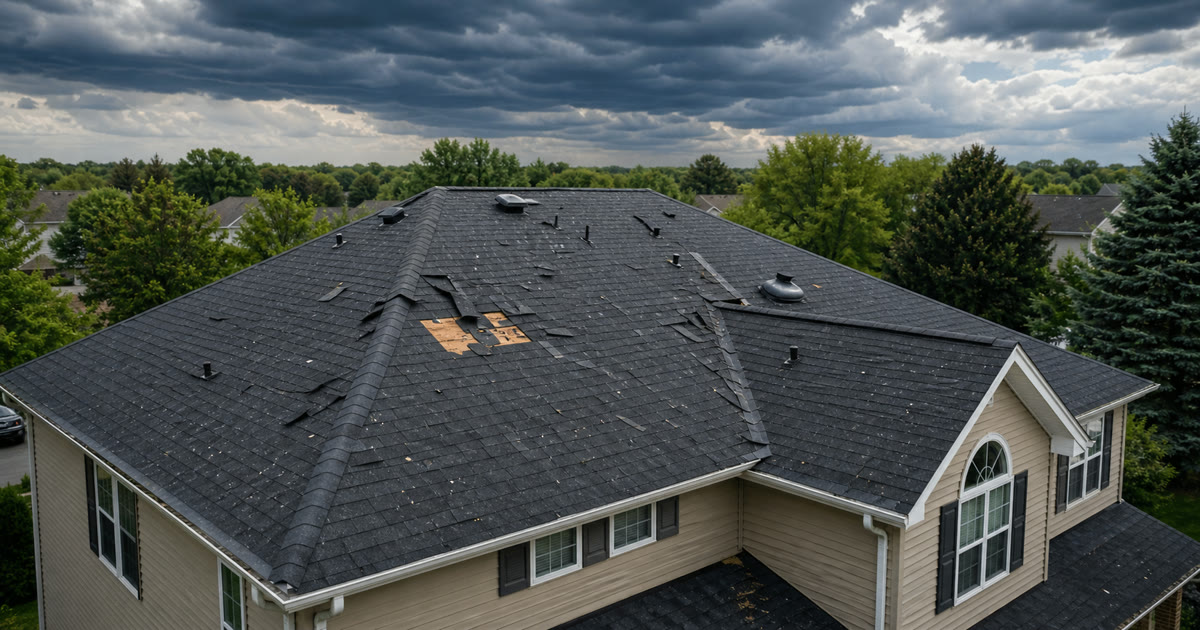
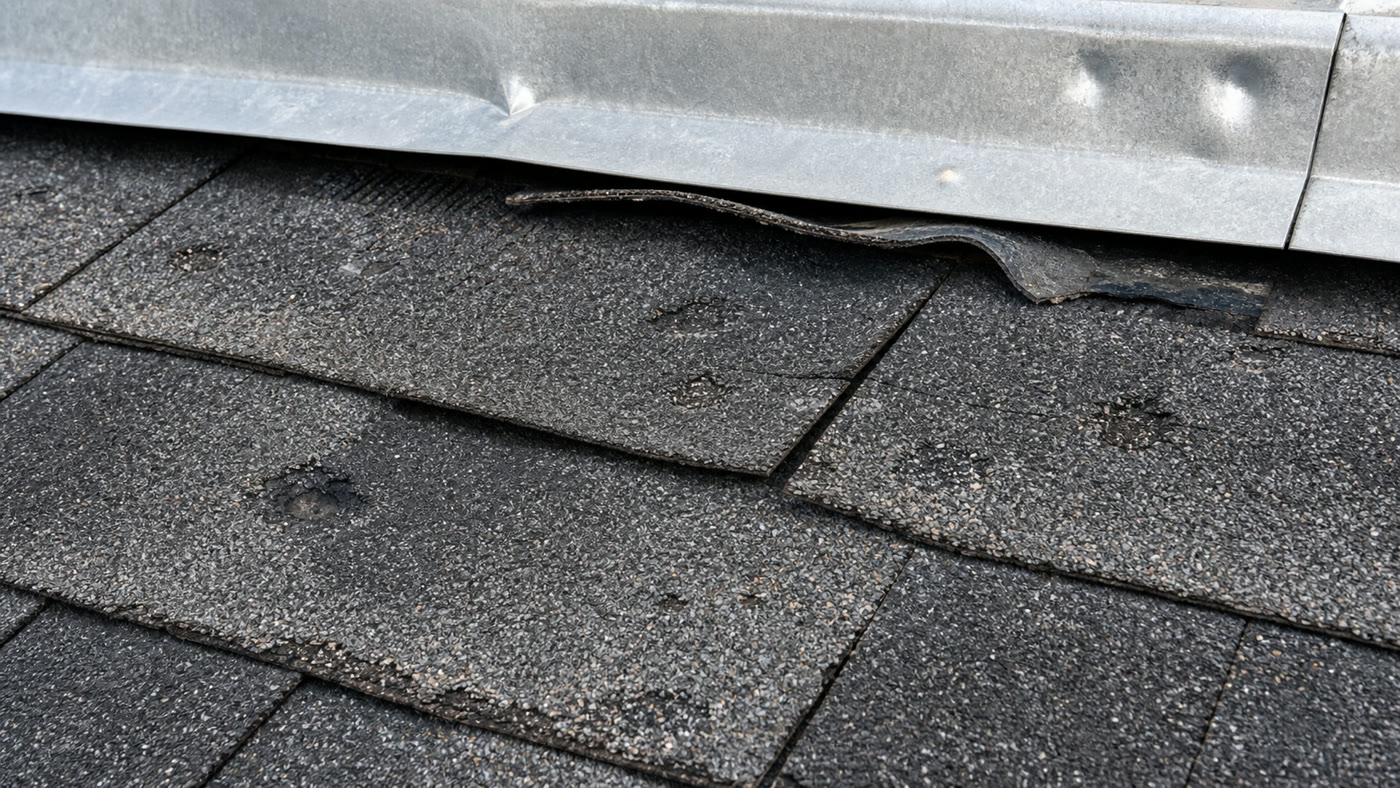
Wind can lift shingle edges, break seals, create creases, remove shingles, damage ridge caps, and displace flashing. Hail can bruise the asphalt mat, loosen granules, crack shingles, and dent vents, flashing, gutters, downspouts, and other metals.
Not every mark is storm damage. Blisters, foot traffic, manufacturing conditions, age-related granule loss, and installation defects can look similar to an untrained observer. Avoid drawing chalk circles or disturbing the surface before a qualified review.
Inspect the roof as a connected system
The visible shingle is only one layer. A complete review may consider underlayment, roof deck, flashing, valleys, vents, pipe boots, skylights, ridge components, gutters, fascia, soffit, siding, attic framing, insulation, and interior finishes.
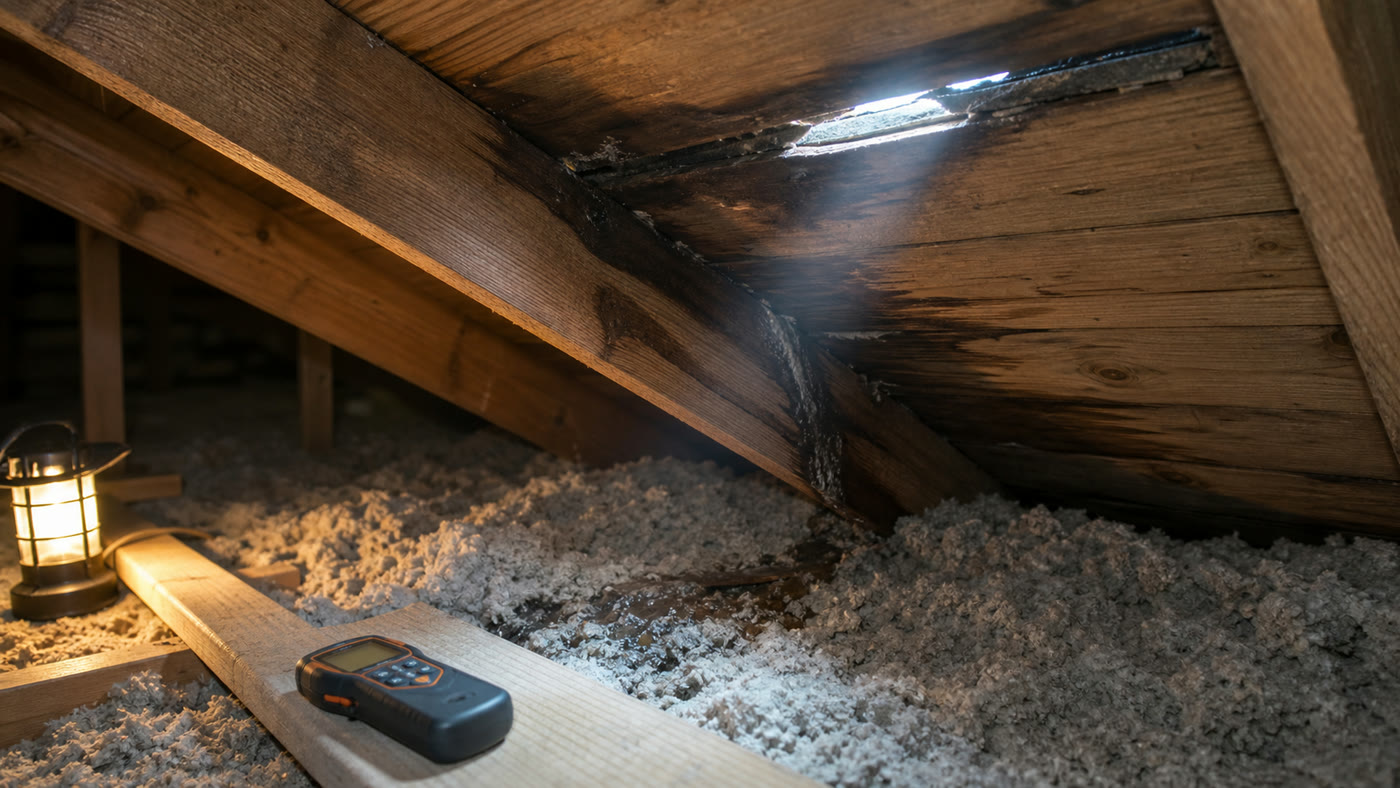
Water can enter at one location and travel before becoming visible inside. That is why the ceiling stain may not sit directly below the exterior opening. Inspection findings should connect the exterior condition, moisture path, and interior result.
Document the loss without putting yourself at risk
Photograph the home from each side, roof areas visible from the ground, displaced materials, gutters, siding, debris, attic conditions, and interior staining. Record the event date, discovery date, emergency actions, and any prior roof work.
Do not climb onto a steep, wet, icy, or visibly compromised roof. A qualified inspector can capture measurements and close evidence using appropriate safety practices. Preserve contractor reports, invoices, and photographs in the claim file.
Understand repairability and matching questions
A small damaged area is not always a simple spot repair. Shingle brittleness, seal condition, product availability, installation method, roof geometry, and adjacent components can affect whether a durable repair is technically possible.
Color difference alone does not decide coverage. Matching and reasonable-uniform-appearance issues depend on policy language, applicable law, material availability, and the facts of the repair. Document the specific product and why the proposed repair method will or will not work.
Read the carrier's roof estimate line by line
Verify roof dimensions, slopes, waste, number of layers, tear-off, underlayment, starter, ridge material, flashing, vents, drip edge, detach-and-reset operations, steep or high charges, access, disposal, permits, and related exterior or interior repairs.
An estimate can include the right roof area but still miss necessary operations. Compare the written scope with the actual assembly and with qualified repair information.
Know how deductibles and depreciation affect payment
The deductible is the policyholder's responsibility and is usually subtracted from the covered amount. Some policies have separate wind or hail deductibles. Actual-cash-value payments may also reflect age and condition through depreciation.
If the policy provides replacement cost and depreciation is recoverable, additional payment may depend on completing repairs and submitting invoices within stated conditions or deadlines. Review the estimate summary and policy rather than relying on the payment amount alone.
What if the roof claim is denied or underpaid?
Ask for the written decision, photographs, estimate, and policy provisions supporting the conclusion. Compare the carrier's inspection with your evidence, weather information, roof history, and qualified findings. Identify specific disagreements about cause, quantity, material, or repair method.
A public adjuster can help organize the roof and related interior damage, prepare or review the scope, and present documented differences. Complex coverage or legal disputes may also require advice from an attorney.
This article provides general information and is not legal advice, coverage advice, or a guarantee of any claim outcome. Policy language and loss facts control each claim.