Key takeaways
What homeowners should know
- Put personal safety and emergency conditions ahead of claim paperwork.
- Photograph the property before cleanup or temporary repairs whenever it is safe.
- Track every damaged area, expense, conversation, and document in one claim file.
- Ask for a professional claim review when the damage scope and carrier estimate do not align.
First, make sure the property is safe
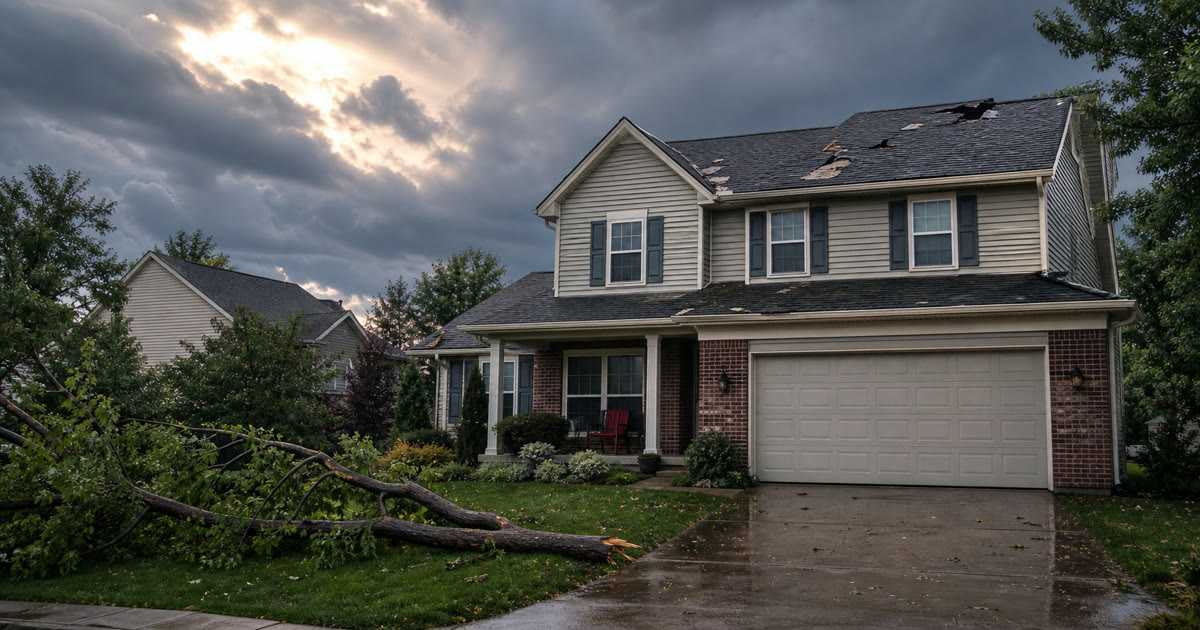
Storm damage can create hazards that are not obvious from the driveway. Stay away from downed power lines, leaning trees, broken glass, standing water near electrical systems, sagging ceilings, and any area that appears structurally unstable. If there is an immediate danger to people or the home, contact emergency services or the appropriate utility before inspecting or cleaning anything.
Do not climb onto a wet or damaged roof to look for missing shingles. Ground-level photographs, binoculars, and a qualified inspection can document roof conditions without creating another emergency. Your first responsibility is safety—not proving the claim in the first hour.
1. Record the storm and the time you discovered damage
Write down the date, approximate time, and type of weather you observed. Save severe-weather alerts, photographs of hail or debris, and any messages from neighbors or local authorities that help establish the event. Also record when you first noticed each damaged area, because a roof leak or ceiling stain may appear hours after the storm passes.
A short, factual event record gives later photographs, inspections, and repair invoices context. Avoid guessing at wind speed, hail size, or the cause of damage when you do not know. Describe what you personally observed and preserve third-party weather information separately.
2. Photograph the entire property before cleanup
Start with wide photographs of every side of the home, then move to closer views of specific damage. Capture the roof from safe ground-level angles, gutters, downspouts, siding, windows, screens, fencing, outdoor equipment, detached structures, and interior rooms. A sequence of wide, medium, and close images helps show both location and detail.
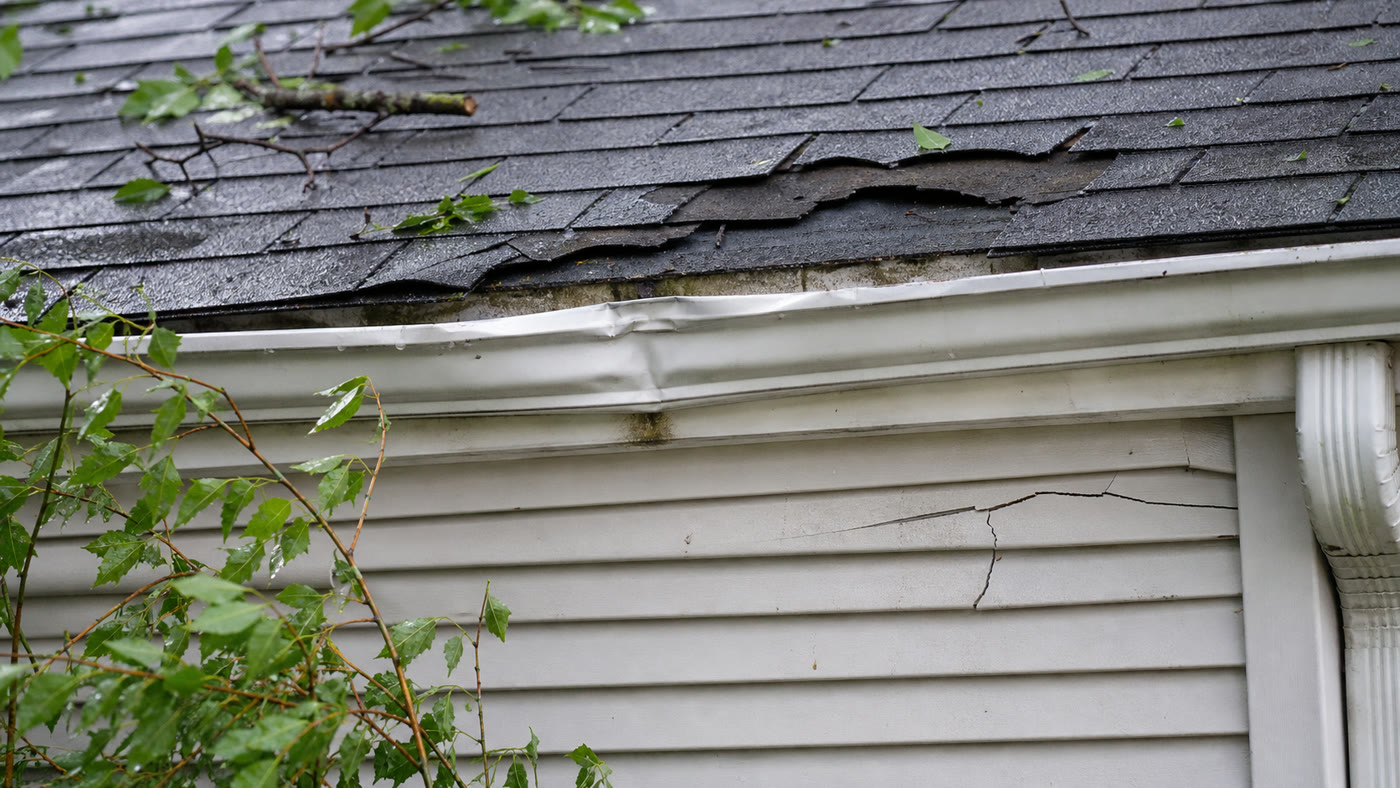
Do not focus only on the most dramatic condition. Small signs—dented metal, lifted shingles, displaced flashing, cracked siding, damp insulation, or a faint ceiling stain—may connect to the same storm event and affect the complete repair scope.
3. Prevent additional damage without erasing the evidence
Most policies require reasonable steps to protect the property from further harm. That can include covering a roof opening, moving belongings away from active water, boarding a broken window, or arranging emergency drying. Photograph conditions before and after temporary work whenever it is safe to do so.
Keep damaged materials unless disposal is necessary for health or safety, and save every emergency invoice and receipt. Temporary protection should stabilize the property; permanent repairs are usually best considered after the damage has been inspected and documented.
- Use qualified help for roofing, electrical, structural, or tree hazards.
- Do not make permanent cosmetic repairs before the affected assembly is documented.
- Save contracts, invoices, material samples, and photographs of removed items.
4. Review your policy and report the loss promptly
Read the declarations page, coverage sections, exclusions, endorsements, deductibles, and duties after loss. Pay attention to any notice requirements or special limits that may apply to roof surfaces, water intrusion, trees, detached structures, or personal property.
When reporting the loss, provide accurate facts and request the claim number, adjuster contact information, and next steps in writing. You do not need to diagnose every damaged component before opening a claim, but you should continue documenting conditions as new information becomes available.
5. Build one organized claim file
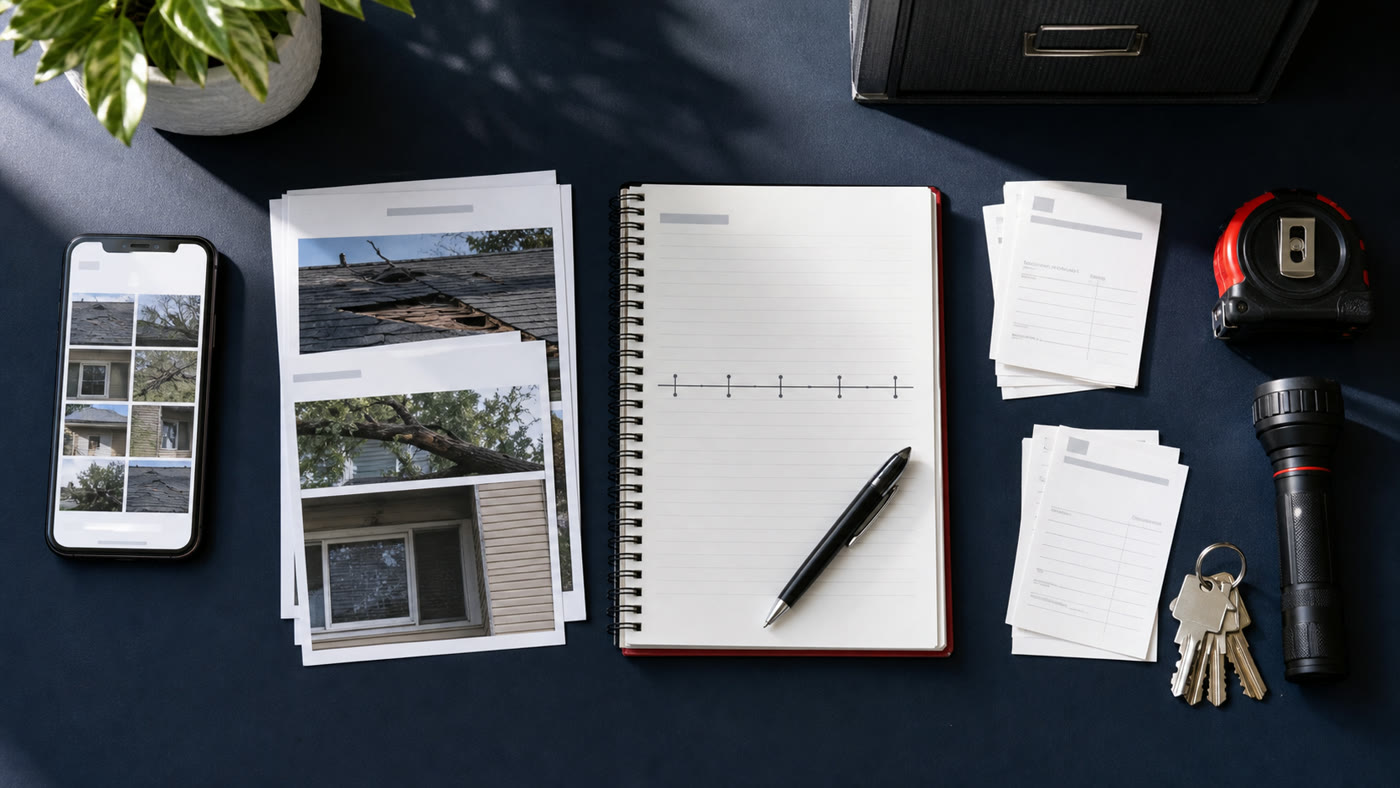
Create a single digital and paper file for photographs, videos, the policy, claim correspondence, estimates, inspection notes, temporary repair invoices, and a communication log. Name image folders by date and location so another person can understand the sequence without relying on your memory.
After every important call, record the date, person, subject, and promised follow-up. Written organization helps reveal unanswered requests, missing inspections, and differences between what was observed and what was included in the carrier's estimate.
6. Prepare for the insurance inspection
Make a room-by-room and exterior damage list before the appointment. Have photographs, mitigation records, and known contractor findings available. If an affected area is difficult to access, ask how it will be inspected rather than assuming it was included.
During the inspection, point out every known condition and take your own notes. The inspection is an important part of the claim, but it is not necessarily the final word on scope, pricing, or coverage.
7. Compare the estimate with the actual damage
When the carrier provides an estimate or decision, compare it with the property—not just with the total payment. Check whether all rooms, roof slopes, exterior elevations, materials, labor steps, code-related items, debris removal, and related components were addressed.
A low total may result from an omitted area, an incorrect measurement, a material mismatch, or a scope that does not account for how the building must actually be repaired. Document specific differences and submit supporting information through the claim process.
8. Get help when the claim becomes difficult to manage
Consider a licensed public adjuster when the loss is extensive, the documentation is fragmented, the estimate appears incomplete, or communication has stalled. A public adjuster represents the policyholder in preparing, documenting, and presenting the property claim; the insurance company's adjuster represents the carrier.
No professional can guarantee coverage or a particular settlement. The value of a qualified review is a clearer damage record, a more organized scope, and informed communication based on the policy and evidence.
This article provides general information and is not legal advice, coverage advice, or a guarantee of any claim outcome. Policy language and loss facts control each claim.